Two Bags and a Dream
PersonalImmigrationLifeGia, you're ten months old as I write this. Right now you have no idea what any of this means, and you seem completely fine with that. You look at everything like it's a puzzle you've decided to like whether or not you can solve it. You smile at strangers, eat grass when we're not looking, and have absolutely no idea that the house you live in, the city you're growing up in, or the life your mom and I built around you came from a very long way away. That's fine, you're ten months old and you have time.
But one day you'll want to know how your mom and I ended up here, what it cost, and what life looked like before you were in it. I'd rather you hear it from us, in our own words, while the details are still sharp, before memory does what it always does and turns everything into a highlight reel.
People talk about the American dream like it's one fixed thing, a house, a car, a better life. What nobody tells you is that it looks different for everyone who chases it, and that the cost shows up in airport goodbyes, in watching your parents age on a screen, in being the one missing from family get-togethers, in flying twenty hours to be home with parents for ten days and then leaving again, in bad days at work with no one to talk to.
My story started in June 2013, when I walked into my first job in India with no salary, a world map on a reception wall, and a quiet question I asked HR on day one. The US part of it started in July 2018: two bags, a laptop, and five hundred dollars on a pre-paid debit card. Your mom would come later, in ways that involve a lottery, a pandemic, a cancelled flight, and a PPE suit. This is both our stories. This is how we got there, and everything that happened along the way.
So here it is...
Home, Before Home Changed
I was born in Dehradun and never had a reason to leave, not for school, not for college, not for anything. Everything that shaped me in those years happened in that one city. My parents are both retired teachers who gave everything to the classroom, and then came home and gave everything to us. My dad can talk history for hours and you'd lose track of time. Calm voice, never raises it, the most humble person in any room. His handwriting looks like it came straight out of a typewriter: perfectly formed, every letter. And whenever I needed money for snacks as a kid, he'd just say: take it from my wallet. No questions, no limit. He just wanted his kids to have the best time.
Cricket in the streets until midnight, cycling at five in the morning because one of us had the idea and the rest of us just went along with it, jogging sessions that appeared from nowhere only to end with someone throwing up in the middle.
We had a whole coded language between us: acronyms that meant nothing to anyone outside the group. MKM was Maha Kamina Mode, basically beast mode, no filter. MBBCM was Maha Baal Brahm Chari Mode, which meant be the most saintly, decent human you could possibly be. We'd drop these mid-conversation in public and people genuinely couldn't tell if we were serious. Some of those kids are still in my life as my lifelong buddies — you get a few of those if you're lucky. Others I have no idea about.
My sister Gauri is four years older than me, which means she had four years of being the only child before I showed up and changed the arrangement. When my mom brought me home from the hospital, Gauri had two questions: where did your huge tummy go, and who is this kid lying next to you? Four years old, perfectly reasonable questions. She figured it out eventually, and has been looking out for me since before I knew I needed anyone to.
I never got to meet my grandfather, having passed away before I was born at my uncle BK's house in the United States, a heart attack. I grew up knowing the story but not the man.
And then there was Phool Singh. He had worked at our family home in Dehradun since he was fifteen. Not staff in the way that word usually sounds, but more an elder brother. He was there when I was an infant and there as I grew up. God takes the good ones for himself, he needs them. Phool Singh left for that wonderful place called heaven, where if we're lucky, we'll all go one day. I think about him often.
America Always Had a Face
UK was fine. Canada was fine. Australia felt distant in a way that wasn't just geographic. America was the only place that had a face on it.
That face, for most of my childhood, was my uncle BK. My father's brother, settled in the US for years by the time I was old enough to pay attention. When he visited us in Dehradun, he walked differently, talked differently. The gifts he brought home were nice, but that's not what I was watching. I was watching how he carried himself: confident, stylish, at ease in a way I couldn't quite name at ten years old. I kept thinking: what kind of place produces people like this?
He always believed I'd make it there one day. He had a name for me: GM. Not Gautam Marya, but GM as in General Manager. It sounded funny at the time, a little kid being called GM by his uncle, but looking back, the man was just looking into the future.
He's not here to see the rest of it. But he called it, twenty years early, on a kid who hadn't done anything yet.
My uncle Sunny added to the picture: computer science background, made it to the US, bought a home, went through the same transformation, and it was becoming a pattern I'd noticed.
Dehradun is a good city. I want to be clear about that. It's green, it's calm, and I'll argue for it in any room. But for a kid genuinely obsessed with computers, the ceiling showed itself early. There was only so far curiosity could take you before the opportunities got thin. I knew by the time I was a teenager that the next chapter would have to be somewhere else. I just hadn't worked out the how yet.
Leaving Home, Carrying More Than I Packed
My nana (my mother's father) was the kind of person who made sure your favorite food was ready whenever you walked through his door. He would offer you a beer at dinner with a smile that made it feel like a small celebration every time. Singing, laughing, genuinely happy to have you there. The sweetest person, and I have videos of him that I still watch.
In May 2013, just weeks before I was supposed to join my first company fresh out of college, my mom and I were in town buying things I'd need for the move. We got the news no one ever wants to get: my nana had been in a road accident. We rushed to the hospital. I remember walking into that emergency room and seeing him on the bed, doctors all around him, the room moving fast in the way those rooms do. They said he was in shock. Then a CT scan. Then, within minutes, a ventilator. Everything happened so quickly that it took a while for any of it to feel real.
He didn't make it.
I watched my mom lose her father. I don't have words for what that looks like on someone's face. And on the other side of all of it, I was weeks away from leaving home. Both things were true at the same time, and there was nothing to do with either of them except carry them.
I called HR and asked to push my joining to mid-June, but the universe had other plans. Next thing you know, a cloudburst happened.
My first day at that job very nearly didn't happen. June 2013, and Uttarakhand had just been hit by a catastrophic cloudburst, the worst natural disaster India had seen since the 2004 tsunami. Floods, landslides, everything disrupted, trains cancelled. The office was in Noida, about seven or eight hours from Dehradun on a normal day. That day was not a normal day.
My parents decided to drive me. My dad took the wheel first, but most of those thirty hours it was me driving. He had taught me how to drive when I was a teenager. I don't think either of us imagined the first real test of those skills would be navigating flooded roads and a thirty-hour traffic jam to make it to a first day of work. Roads submerged, traffic backed up for miles, no way of knowing how long it would take or whether it would even clear. I sat behind that wheel thinking: I am not missing this. My parents were thinking the same. They had barely let me miss a day of school my whole life, and they were not about to let me miss this one.
We made it!
Five Years and a World Map
The moment that made it real: my first week at my first job, fresh out of college, walking into the reception area and seeing a world map on the wall, marked with every country where the company had offices. I asked HR how long it typically takes to get posted to the US, just a question. But I stood there in that reception area and told myself, quietly: I'm going to make it there one day.
By the time I was working in Noida, the dream had taken on a more practical shape. I joined the company as a trainee in 2013. Six months evaluation, no salary, officially listed as an associate software engineer. I said yes without hesitating, which probably tells you everything about where my head was at the time. I had already seen the world map in that reception area. I knew where this company had offices.
During those six months, every expense: rent, food, travel. All on my parents. All of it. I don't say that lightly. Most people have at least one season of their life that only worked because someone else quietly made it possible. That was mine, and I know it.
Once I was through the evaluation, things moved quickly. I was selected to work on Hadoop under a veteran engineer, which was not a small thing. I would follow him into work and stay for thirteen, fourteen hours a day, learning everything I could about big data, absorbing how he thought about problems.
The pay was less than it should have been. Somewhere along the way I walked into an AMEX interview with one year of experience and got taken apart in the technical round. I wasn't ready, and the interview made sure I knew it.
In 2014, I was chosen to train a whole team on Hadoop (big data): senior managers, developers, people with years on me. That's where I met Kanak, who would eventually become my wife. How it went from that training room to a marriage is a story that deserves its own post. What I found out much later: when she was a few months old, her family had visited Dehradun, a few minutes from my house. Two babies, a few minutes apart in the same city, completely unaware of each other. The universe was apparently already working on something.
The work continued: long hours, less pay than it should have been, but I was getting better at it and the projects were real.
For most of that time I was what you'd call a shadow resource: doing the work while my manager handled the client relationship. The client was in the US. I used to sit on those calls wondering what would happen if the person on the other end actually knew me directly, if they could see the work for what it was.
Then my manager moved to a different project, and I found out. Overnight I was the one on the calls. The client didn't take long to form a view. Within weeks they wanted me in the US.
If I'd been on those calls from day one, I'd have landed there much sooner. But looking back, the delay was a gift. More time in India, more time to live the life I was about to leave. The later the merrier, as it turned out.
Nobody handed it over, and that part I'm proud of.
By the time I had three and a half years in, I resigned with an offer from a firm in Gurgaon. That's when the company I was working with asked me to stay and offered to apply for my H1B visa (a work visa that lets you legally live and work in the US). I thought about it for about as long as it took to remember the world map.
Months passed with no update. Then I started hearing that a few people had made it through the lottery. Weeks went by after that and nothing came my way, and I had almost given up hope. And then one day, an email from HR landed in my inbox: you made it.
I called Kanak immediately.
She already knew I had applied, and when the news came through she was genuinely excited, more than most people would be for someone else's win. That's just who she is.
The Road I'd Taken Five Hundred Times
After the lottery, I applied for the US visa and the paperwork moved fast. But before the departure date arrived, there was one more thing I needed to do for myself.
Kanak, not wanting to stay at a workplace that would remind her of me every day, had started looking for a new job. I used to go with her to interviews for company. One of them was at AMEX. The same AMEX that had taken me apart years earlier with one year of experience to my name.
I decided to try for the role myself. I had a US visa in my pocket and absolutely no intention of joining, but the unfinished business was real. Out of 250-plus candidates, I was the only one to clear the interview end to end. I remember the AMEX manager taking me out for coffee while the other candidates were still sitting in the waiting area. Kanak was out there watching, wondering what on earth was happening.
It was never about the job. It was about knowing, once and for all, whether I was good enough this time, and I had my answer.
Then I finished packing and got ready to leave. My mom had come to Noida from Dehradun to be there for the goodbye. The cab was ready and my bags were at the door.
We pulled out of my apartment and onto the road toward the expressway, my mom and Kanak and Kanak's sister Sona all in the cab. A five minute stretch I had driven five hundred times, leading out to the highway toward IGI airport in New Delhi. I had never once thought about what that road looked like at night. I hadn't imagined what was waiting for me on it.
It was late, all shops closed, long dark stretches between the occasional light. And then, on a sign somewhere ahead, two words blinking in the dark: Phool Singh.
I sat in that cab and stared at the sign as long as it was visible. The goosebumps didn't stop. I don't know how to explain it other than: it felt like he was there, seeing me off.
At the airport, the goodbyes were harder than I had prepared for. I was the first person from either my family or Kanak's to go to the United States. Both families had poured everything they felt into those last few minutes. My mom was smiling.
She was also not really smiling.
She knew she wouldn't see me often, I knew the same, and neither of us said it because there was no point.
I remember boarding the plane thinking I'd spend the flight thinking about the US, about what was ahead, the job, the city, the new life. Instead I spent most of it thinking about my mom traveling back from Delhi to Dehradun alone, and about Kanak, because we ate lunch and dinner together almost every day, explored every restaurant in the Delhi-Noida stretch worth trying, and everything she walked past for the next several months was going to remind her of someone who wasn't there.
On a plane to start my new life, thinking about everyone else, not myself. That's just how it was.
Shampoo and Skylines
My mom had never been to the US, which meant she packed out of pure love and exactly zero information about what I would actually need there.
She put in shampoo, pulses, some clothes, light snacks. The kind of packing that solves the problem of being somewhere unfamiliar by making sure you have the familiar with you.
The shampoo leaked in transit, my leather shoes did not survive it, and I have never packed shampoo for a trip since.
I landed in San Francisco with two bags, a laptop, five hundred dollars on a pre-paid debit card, and everything I owned smelling faintly of shampoo.
7,693 miles from Delhi to here. The first time my feet were on American ground. I stood outside that terminal for a moment and felt the specific strangeness of a day you've imagined so many times finally becoming real, all at once, with no ceremony. Just the SFO sign, the bags at my feet, and the quiet sense that I had actually done it.
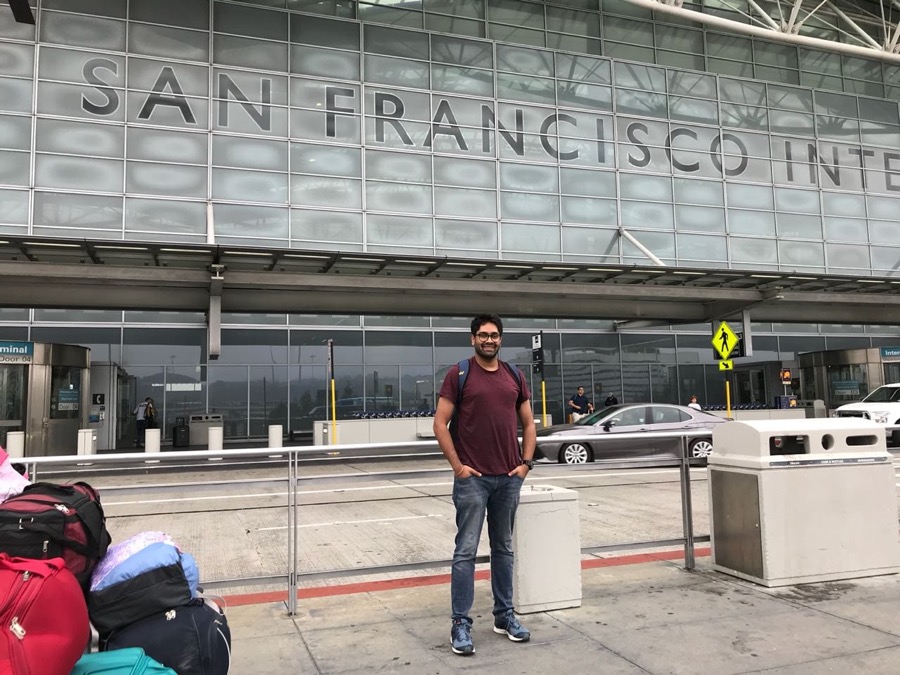
July 2018. SFO. Two bags, a laptop, and approximately zero idea what came next.
The company had booked me into an Extended Stay America in Emeryville, on the Oakland side of the bay. I dropped my bags, looked around the room for about thirty seconds, and walked across the street to Target.
I needed water, and Target, a large American retail chain, was right there, and I had never been inside one before. Everything bright, all white, red carts, the air with a specific smell I couldn't place but immediately associated with here. I walked around longer than I needed to, pushing a cart, converting every price from dollars to rupees in my head before I could stop myself, which is what your brain does for months before it finally adjusts. Went home with water, some basics, and the specific satisfaction of having done the first ordinary thing in a new country.
That night I fell asleep before I could call home, and my family and Kanak had been waiting. The missed call traveled at international speed, and by the time I woke up there were multiple people who had been awake imagining various catastrophes. I told them I had just fallen asleep, though I don't think they fully believed me.
Once the jet lag cleared, Emeryville had things to say.
Emeryville was not the American dream I had pictured. Constant police activity, homeless people under bridges and on the roads, occasionally in the hotel lobby. A friend told me about the time someone ran in through the front doors carrying a fire extinguisher. I missed it, fortunately. But that's Emeryville. One minute you're looking at the San Francisco skyline across the bay thinking this is it, this is really it. The next you realize the dream comes at a price that's scary, and the price is visible on the streets whether you want to look or not.
What You Don't Tell Your Family
The routine settled in fast. First thing every weekend: bus to Viks Chaat Corner. Decent Indian food, a grocery store attached, pre-cooked meals and paranthas to stock for the week. Cooking hadn't exactly been a skill I'd developed, and surviving on Viks and packaged food were two of my primary talents that year.
I had some friends living nearby but no car, which meant taking the train to their city and waiting to be picked up from the station. I don't like putting logistics on other people, so I kept the requests small and the travel my problem.
My cousin Roonie, an elder-brother figure, lived in Los Altos Hills, a different end of the bay from Emeryville in every sense: posh, quiet, the kind of neighborhood running on a completely different version of the same city. He's one of the genuinely nicest people I know. We went to a bar called Rose & King for darts and beer, drove out to Newport near the Apple offices for dumplings, walked around Palo Alto downtown. At one restaurant Roonie ordered chicken 65 and called it chicken 69, specifically to see the server's face. The server maintained full professionalism. I did not. All of it helped me stay sane.
The harder parts I'll say plainly: bad days at work with no one to talk to in person, and you keep it inside because you don't want your family or Kanak to worry. Missing festivals the way they happen in India, because nothing anywhere else comes close. Missing everyone's birthdays, the ones that should have had you in the room but had you on a screen instead. Missing the food, my parents, my sister, Kanak, friends. Leaving behind a gaming PC, a bedroom, a wardrobe, pieces of how I understood myself, not just things. Moments where the question comes up honestly: is any of this actually worth it?
The answer was always yes. My father has been paralyzed for years. Not once did he use it as a reason not to show up for us. Not for school, not for anything we needed. The least I could do was make sure he never had to worry about anything in his old age. Being in a position to take care of my parents when the time comes, without having to ask anyone for help. That was one part of it. The other: Kanak and I had always wanted to build our life on our own terms, fund our own wedding, not lean on either family for any of it. Even on the worst days, the purpose was clear.
The Clothes I Bought the Day Before
In April 2019, nine months after landing in San Francisco, I went back to India to get married.
I told my lead I needed to travel. He took me for a walk, the kind that opens with congratulations and then takes a turn. The client, he mentioned, might discontinue services around that time. The contract could be at risk.
Sitting on the wrong side of a visa with an uncertain contract meant that if I stayed in India too long and things went sideways, getting back to the US could get complicated fast. So I took two weeks off. Two weeks to get married, see my family, see Kanak, and get back on the plane.
Kanak had handled almost everything: the venue, the cocktail party, the marriage card, coordinating with my mom. I showed up. She planned the wedding and I turned up to it. She has not fully let me forget this, which is fair.
I bought my wedding clothes the day before the ring ceremony. In India, when you need something done quickly, cash moves faster than time. The right shop, the right tailor, the right amount. Done.
There's a full post coming just about the wedding. For now: we got married, and I made it back on time.
Back at work, my lead pulled me aside on a separate occasion and suggested I should probably start looking for another job. I heard him out and didn't act on it. A few months later he left the organization, and I was promoted into his role. Sometimes you should not take advice.
The Lottery and the Lockdown
The plan was simple: Kanak would resign, come to the US, we'd figure out the rest. What actually happened was better.
Before I left, we used to go for interviews together. Kanak had an offer from Cognizant in hand and had already made up her mind — she was going to resign from the same company where we had both worked, the one where I had trained her batch on Hadoop years earlier. After I left for the US, she did exactly that. She resigned.
That's when the company's HR came back with something she hadn't expected: they wanted to retain her, and they were willing to file her H1B lottery application. H1B is exactly what it sounds like, a lottery, genuinely random, tens of thousands of applications for a limited number of spots. You could win it on the first try, or you could miss it for years.
We took the gamble. Her name came in on the first try: tens of thousands of applications, one shot per year, years of waiting if it doesn't come through. She cleared it on the first attempt. There are moments where you stop and think: that could have gone so differently. This was one of them. The visa interview still had to be scheduled, HR was coordinating appointments for everyone who had come through the lottery, and the paperwork alone took months. But it was moving forward, and that was enough.
In early 2020, before COVID changed everything, I flew to India to meet family and Kanak. The other reason: her H1B visa appointment at the US Embassy in Delhi. I wanted to be there.
I waited outside while she was inside, because that's all you can do for someone else's visa appointment: stand outside and wait, which is one of the more helpless feelings available to a person. Kanak came out and walked toward me. From across the road she looked at me and shook her head.
I genuinely freaked out.
She kept walking, got close enough to see my face, and smiled. She had been messing with me. The visa interview had gone through completely fine.
End of February, I flew back to the US, and about a week later the world went into lockdown.
If you were anywhere in the world in 2020, you know how it went. Months without a haircut, masks everywhere, sanitizing hands twenty times a day, the small rituals that became automatic before you noticed you were doing them. The days had a shape that took some getting used to: wake up, open the laptop, work from the same corner of the apartment you'd slept in, eat something, close the laptop, and repeat it all the next morning. No commute, no office, no colleagues to read a room with, just the apartment and the silence a city makes when it stops moving.
For me there was an extra layer to it. Every morning I opened the news from India and told myself I would not go looking for the worst of it, and every morning I looked anyway. Hospital beds running out, oxygen cylinders in short supply, numbers that the news kept reporting as if they were just numbers. My parents were in Dehradun, Kanak was in Roorkee, and I was here on the other side of the planet with absolutely nothing I could do except call and hope they picked up. Seeing your family on a screen is not the same as being with them, and even when the call went fine, hanging up meant sitting with that distance for a while before you could put it somewhere manageable.
Kanak's visa had come through and her H1B was approved, so the plan was for her to fly over as soon as things settled. But COVID had no interest in plans. Nobody knew when flights would normalize or when things would ease enough for someone to spend thirty hours crossing continents in a PPE suit, and the one thing I knew was coming kept feeling just out of reach. What got me through those months was work to keep the hours structured, games on the PS4 like Call of Duty Warzone to fill the evenings, calls with family and friends, and the steady act of praying that everyone got through it.
One good thing was coming, though. Kanak was going to be here, and that was the one thought that held the days together.
End of the Distance
After months of waiting, watching COVID freeze everything in place, the day finally arrived. Kanak said goodbye to her home, packed her bags, and got ready for a journey she would not forget. Not for the right reasons. She flew in a full plastic PPE body suit. The route: Roorkee to Delhi, Delhi to New York, New York to Miami, Miami to Denver. About thirty hours.
I was still in San Francisco, waiting for her arrival before making the move to Denver permanent. My plan was to fly ahead of her and be there when she landed.
Her Miami to Denver flight got cancelled.
She had been traveling thirty hours in a PPE suit, running on fumes, kept going by the thought of finally arriving after everything: the wait, the lottery, the visa, the pandemic. The last flight was cancelled, and she was sitting in Miami airport, completely and utterly done.
I was not going to let that be how it happened.
I booked a flight from Denver to Miami. Business class, because that was the only option available, which hurt in the way an unavoidable expense always hurts. Mid-flight I called Sunny uncle, my mom's brother who lives in Chicago, and asked him to book two tickets from Miami to Denver for us both. He sorted it.
I landed in Miami with months of COVID hair and a beard that had made its own decisions. I spotted Kanak across the terminal. She was on a bench, still in her PPE suit, almost asleep, almost fainting. She looked up and saw me, and I could see in her face exactly what I was for her in that moment.
I hugged her, told her it would be fine, and she slept on my shoulder in that airport for a few hours while we waited.
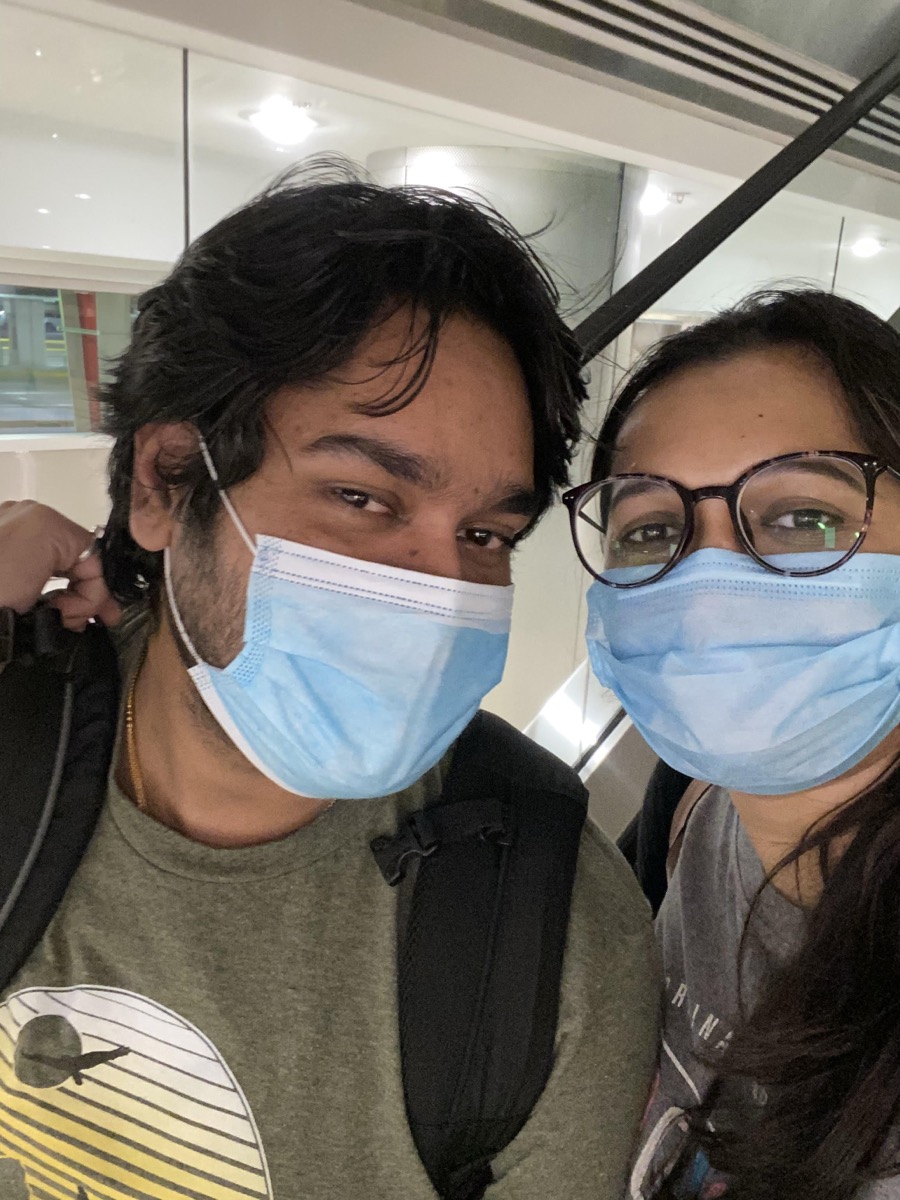
Miami airport. Thirty hours of travel, a cancelled flight, and COVID hair. Finally together.
We flew to Denver together. Her bags didn't arrive for another two hours after landing.
And her very first encounter with America, before the bags, before anything else: a man in the arrivals area throwing his phone around in every direction, for reasons that were unclear to anyone present.
Welcome To The American Dream!
"Some things you just don't let end badly. You book the next flight."Sunsets, Paranthas, and a Heart Attack
Kanak's company had placed her in Denver, her H1B was tied to their role there. COVID had made remote work the new normal for me, which meant where I lived was suddenly a real choice. The answer was easy.
I had done Emeryville and was not going to let Kanak do one too.
I told her to find a hotel in Lone Tree: good area, close to her new workplace, the kind of neighborhood where you can exist without bracing for something at all times. Her company had arranged hotel accommodation. We had a kitchen, a living room, proper space. Not quite an apartment, but close enough to start.
The rental car took a few days to come through, so our first dinner out was an Uber to California Pizza Kitchen. Neither of us minded. We were just happy to be somewhere together, outside, eating real food, taking stock of the fact that after everything it had taken to get here, we were finally sitting across from each other in the same country.
Most evenings we would walk outside the hotel, nothing specific in mind, just out. Colorado in July does something to the sky around sunset. It goes pink against the mountains in a way that takes a moment to process the first time you see it. We would stand there and watch it, and neither of us was thinking about the car we didn't have yet or the apartment we hadn't found. We were just there.
The first time Kanak cooked in that hotel kitchen, I ate it and remembered for the first time in two years what home-cooked food actually tastes like. She doesn't follow recipes and doesn't need to. Her hands just know the magic.
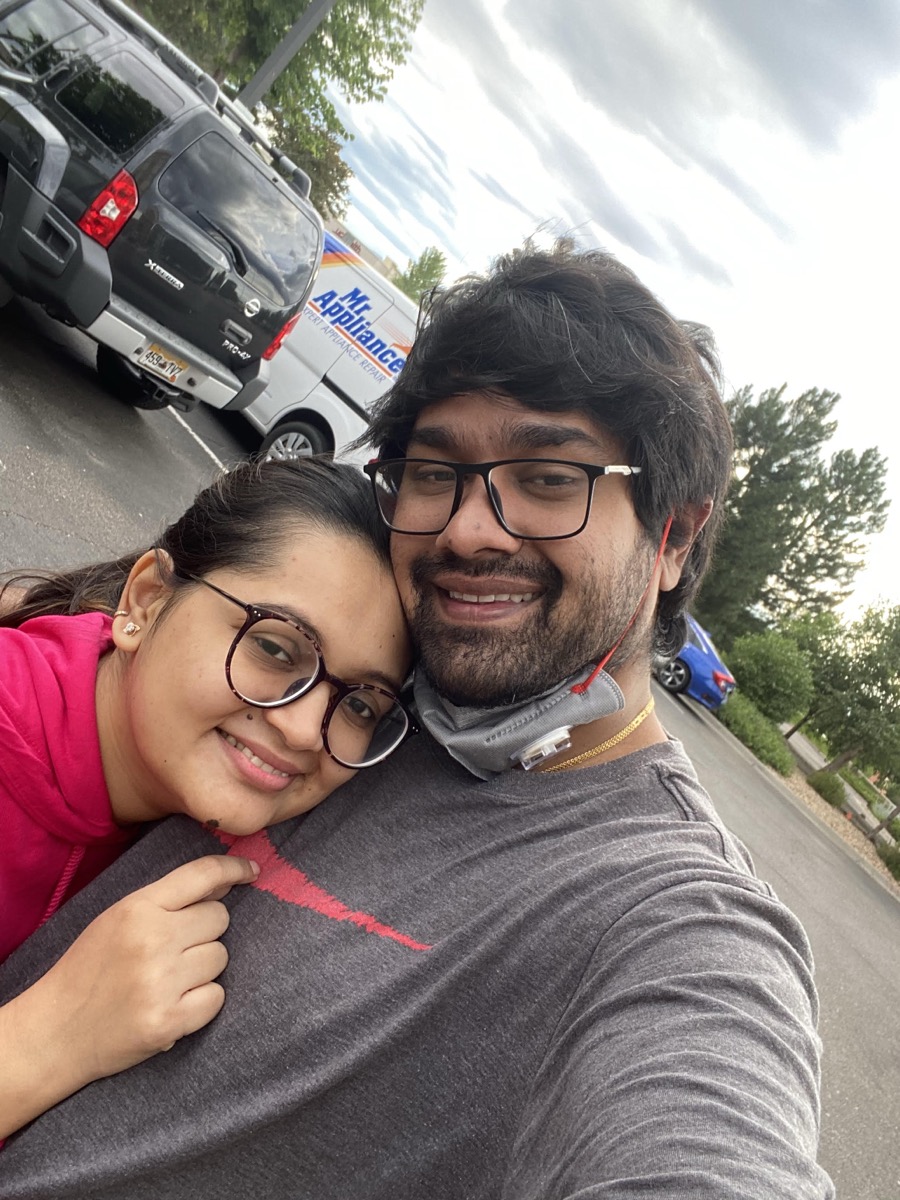
Outside the hotel. Lone Tree, Colorado. The first chapter of the same city, finally together.
We stayed about four months. I cooked too, occasionally. I follow YouTube videos, gather every ingredient on the list, treat the whole thing very seriously, and produce a dish that is always technically food. Kanak doesn't follow YouTube videos, which is the difference between us in the kitchen, documented here for the record.
No recipe. No YouTube. Just her hands knowing exactly what to do. Hotel kitchen, Lone Tree.
When it was time to move out, we were doing the heavy lifting ourselves, bags and boxes out of the hotel on a Sunday, when I felt it. Pain in my left arm, deep and persistent, and then something on the left side of my chest that didn't feel like a muscle at all. I tried to shake it off, but it didn't.
My uncle BK and my grandfather had both died of heart attacks. Both in America. That fact didn't take long to arrive in my head, and once it did, sitting still with unexplained chest pain stopped being an option.
Kanak and I drove to urgent care, where they took one look at the symptoms, told us they couldn't handle anything cardiac, and pointed us straight to the Emergency Room. So urgent care did not think it was urgent enough to treat, but urgent enough to send us immediately somewhere else, which is a specific kind of reassurance.
I had never been inside an Emergency Room before. There's a particular quality to that room when you're the one checking in: the paperwork you sign without fully reading, the way they move quickly when you say chest pain, the cold of the table. An X-ray and ECG done in fifteen minutes. Then a wait that felt longer than it was, Kanak next to me, both of us quiet in the way you go quiet when you're waiting for something that matters. The result came back: all clear. Almost certainly a muscle pull from the lifting.
I exhaled for what felt like the first time in an hour. Kanak and I looked at each other, said all is well, and headed for the door. We were almost out of the building when they called us back in.
I figured it was paperwork, maybe a signature they had missed. It was a signature. On a document that said: You owe $17,000 for your Emergency Room visit.
That's when I actually got a heart attack!
Insurance covered most of it, and the same treatment in India would have cost fifty dollars, but the number stays with you regardless. The Emergency Room in America is not, as it turns out, for the faint of wallet.
"In America, the relief comes in two parts. First the results. Then the bill."The Room We Were Waiting to Fill
Before any of that, there was San Francisco to close out.
I had been living there for two years before relocating to Denver to be with Kanak. COVID had made remote work possible, which meant I could keep my job and work from Denver without needing to be in the office. That was the lucky part; the less lucky part was that everything I owned was still in an apartment on the other side of the country.
Kanak and I flew to San Francisco together. She finally got to see where I had spent those two years: the tiny setup, the small space that had been my entire world for most of that time. We went to see the Golden Gate Bridge. It was covered in clouds, barely visible, which felt appropriate somehow.
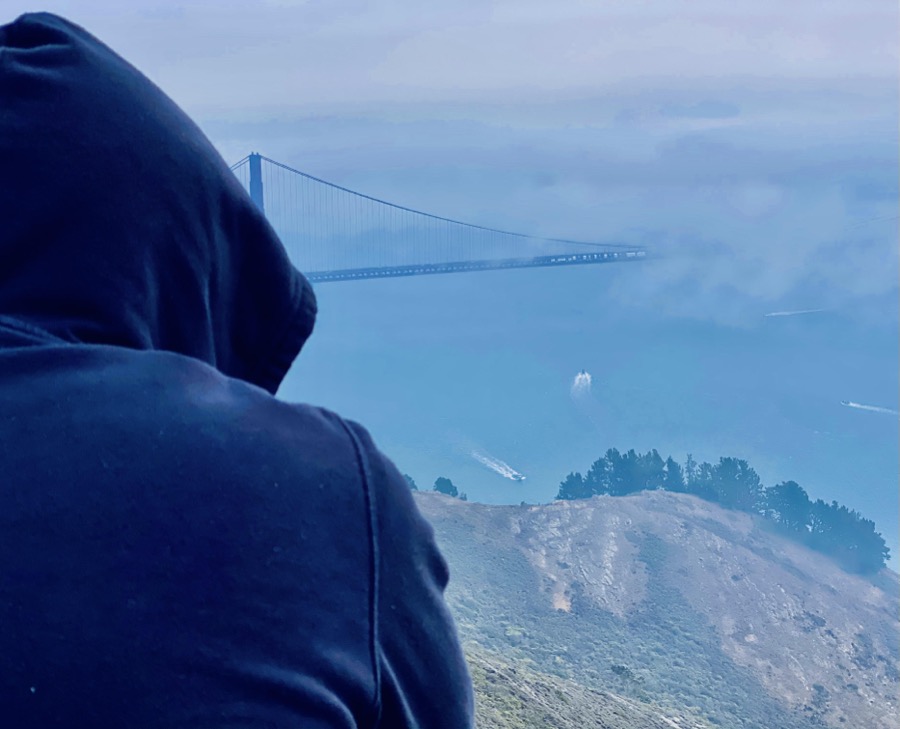
Covered in clouds, barely visible. Felt about right for a goodbye.
I said goodbye to friends, sold the bed, the desk, the things that had made the place feel like somewhere rather than nowhere. Then we flew back to Denver, and after that, we moved in.
Our first apartment was at Contour 39 in Lone Tree. Two bedrooms, two bathrooms. After years in a one-bedroom in the Bay Area, two bedrooms felt like a deliberate choice about the kind of life I wanted now that it was the two of us. Space for proper furniture, room to actually move around, and a second bathroom, which I will say from honest personal experience is not optional when two people both need to be somewhere at eight in the morning. That situation arises more than you'd think.
The second bedroom was always meant for family. We wanted my parents to come, Kanak's family, people who had waited a long time to see this life we were building. COVID had other plans, and the room stayed empty longer than either of us expected, waiting with us. Family didn't really come until we had the house. We make plans, and God always has a bigger one.
Kanak loves snow. Every winter without fail she is outside making something in it. Our first winter at Contour 39 we built a snowman together in the little garden next to the apartment, no particular plan for it, just two people who had come a very long way deciding that building a snowman on a cold Colorado morning was exactly the right thing to do. Neither of us was worried about the cold.

First snowman. Contour 39, Lone Tree. Neither of us was cold enough to care.
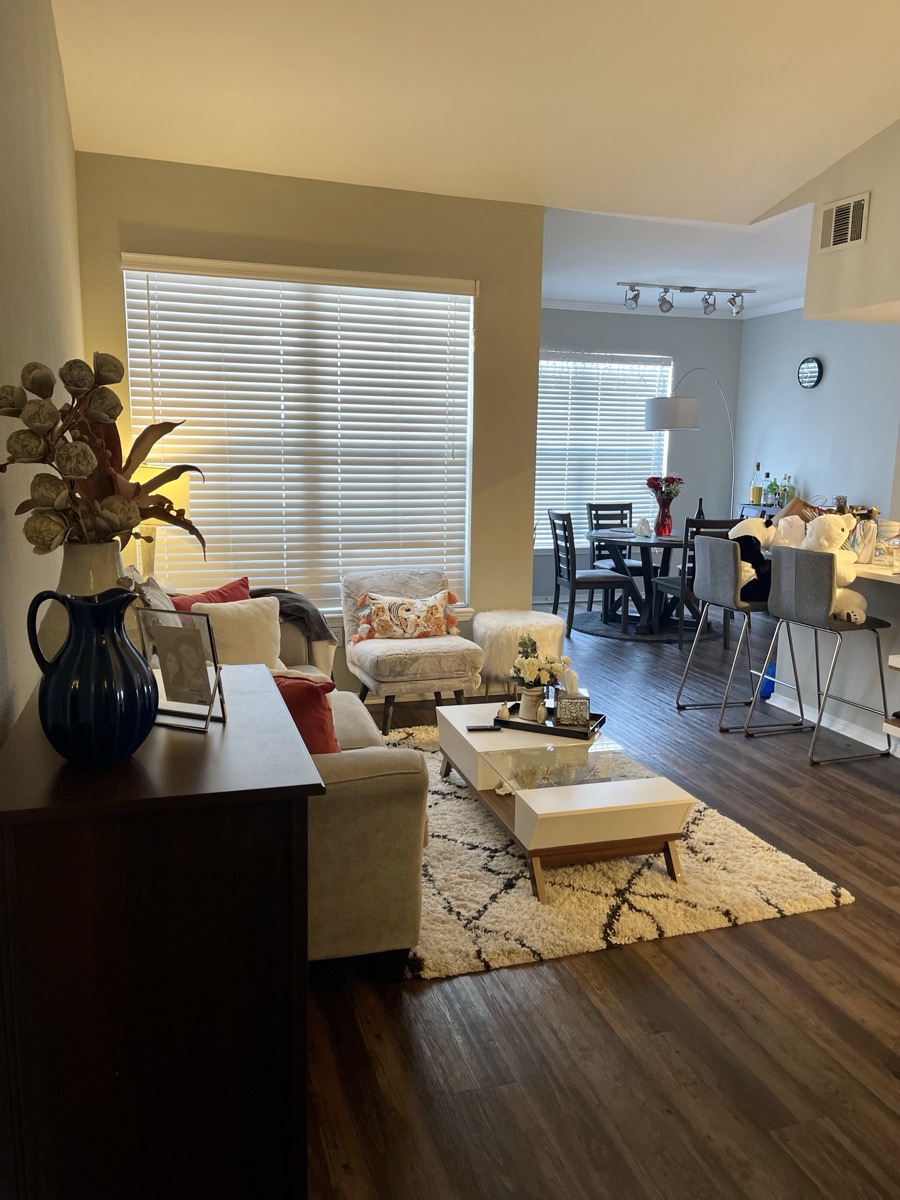
Contour 39. Two bedrooms, two bathrooms, and the first space that actually felt like ours.
Around the same time we sorted the apartment, we needed a car. Before we ever set foot in a showroom, Kanak had already decided in India, years before she arrived, that she wanted a Jeep Grand Cherokee. We test-drove several things, with the Jeep showroom as the last stop. We got in the Grand Cherokee Limited 2020 and that was it, no more conversation to have. Luxury, style, the feeling of a decision that was never really a decision at all. We looked at each other and you could feel a dream coming true.
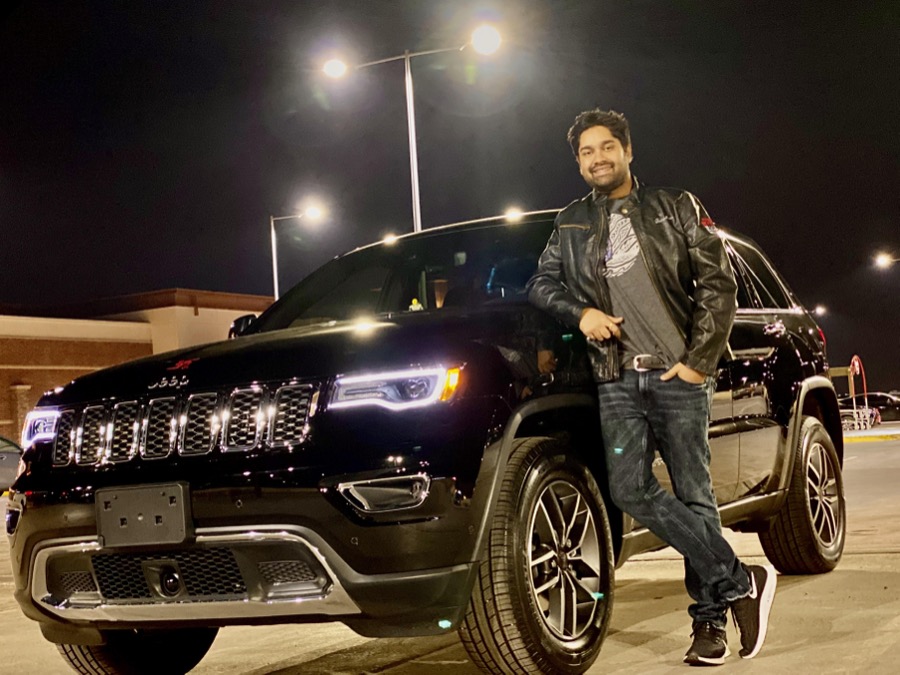
The night we picked it up. No more conversation to have.
Built, Not Bought
I was genuinely comfortable renting. That's the honest truth. In a rental, nothing is your problem: dishwasher breaks, one call; bulb goes out, one call; snow removal, someone else's morning. Fixed rent, no interest, no maintenance to own. I had structured my life so things got fixed without me needing to think about them, and I saw no reason to change that.
Kanak's colleagues asked her where we lived and what we paid. She told them. They told her we could probably afford to buy at this point and come out ahead on the rent. The seed was planted, and Kanak brought it home.
It took some effort to convince me, she was right and she had to work for it.
I had two private arguments running in my favor for eventually agreeing. The first: in the apartment, voices traveled through walls in ways that created complications. Any kind of voice. Gaming voices especially. I play Call of Duty online with friends, and the language that happens during Call of Duty at full volume is not appropriate for shared thin-walled living. A house meant I could shout at the screen freely and the neighborhood would not be involved. I kept that argument to myself during the early negotiations.
The second: I wanted a big, beautiful kitchen.
We found an Indian real estate agent, a Punjabi woman like me, which made the whole process feel less like a transaction. We looked at a lot of pre-owned houses and none of them had the kitchen I was looking for. We did settle on one eventually: corner lot, big backyard, good bones. Put in an offer.
It didn't get accepted: another buyer came in with more on the down payment. We had only been building savings for a year since Kanak arrived, and we couldn't match that number. I was disappointed in the specific way you get disappointed when you'd already mentally moved in.
We kept looking. Weeks went by, a few more houses, nothing with the right kitchen. And then we found a plot right in the heart of Parker, on Mainstreet. Not a pre-owned house. A plot. Which meant we weren't buying someone else's choices; we were building exactly what we wanted from the ground up.
We finalized the model with the builders, handpicked every selection, decided what the kitchen would look like down to the last detail. And then, every week, Kanak and I drove to that piece of land and watched. The foundation going in. The frame. The walls. The whole thing assembling itself from a flat piece of Parker ground into something that was ours. We stood there every week talking about how we'd decorate it, which room would be which, what it would feel like to be inside it. When it was done, it felt like standing at the edge of the dream and finally stepping in.
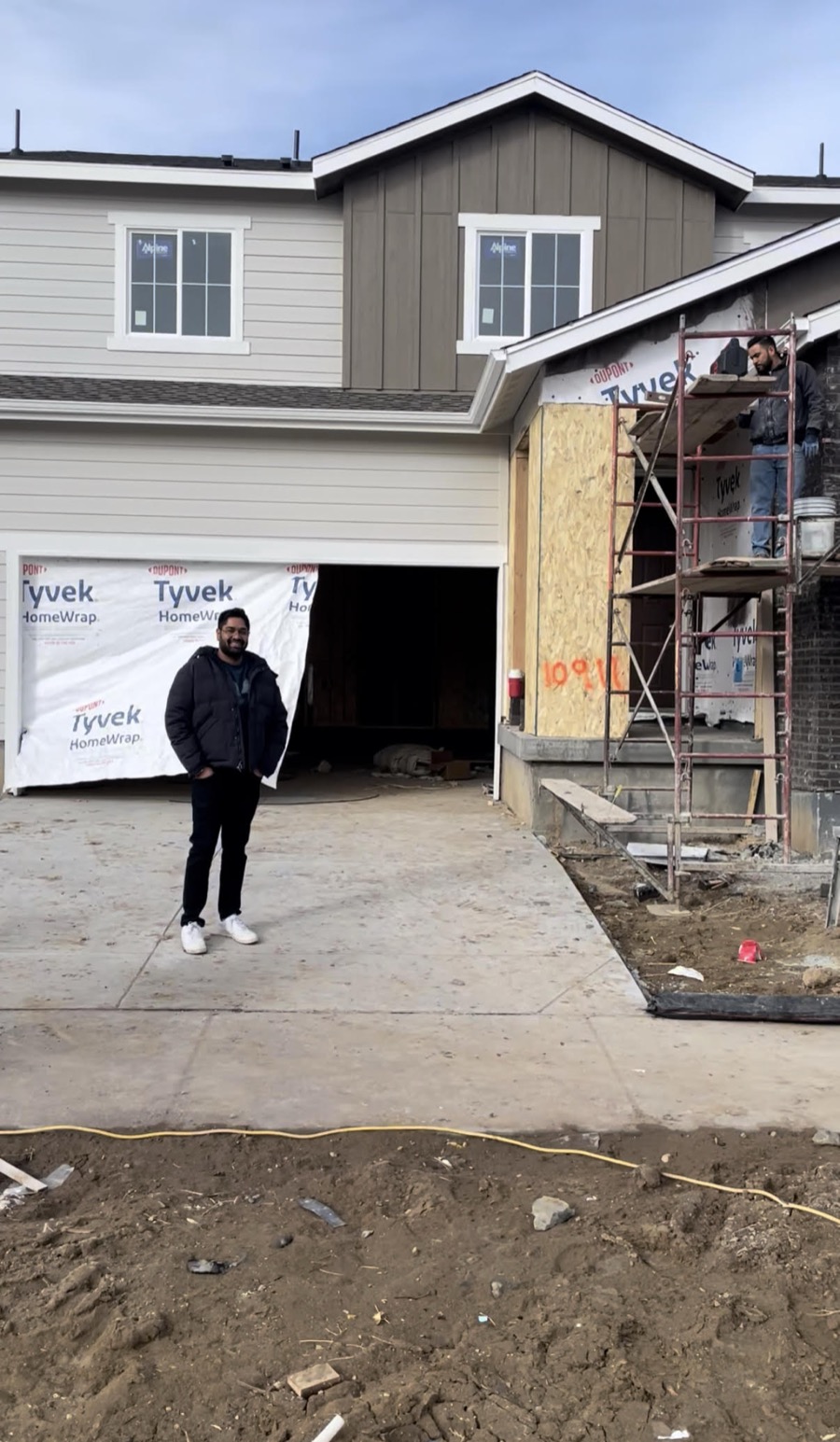
Parker, Colorado. Still under construction. Already home in our heads.
The first thing I did when we got the keys was connect my music system, woofer and everything. I called two friends, asked them each to stand on one side of the house, and turned the volume all the way up.
We had received a noise complaint in the apartments once, and that was not going to happen again.
Full volume, not a sound to the outside world. We were home!
Finding Your People
Denver was a clean slate in every sense. No history, no network, no one who knew me. After years of building something in the Bay Area, starting over socially felt like moving into that empty second bedroom. You know it'll feel like home eventually, but for now it's just space.
You meet people. Some of them stick.
Some of them you eventually realize are running a completely different program under a very convincing interface. Always present, always warm, always somehow in the room — until you notice that every conversation has a direction, every favour has a receipt, and every social gathering is also a data collection exercise. No civic sense, no awareness of how their presence lands on others. Everything calibrated, nothing genuine. The disguise is impressive, honestly. But once you see it, you can't unsee it.
I believe in emptying the trash, not keeping things in the recycle bin. Whatever bad you put out into the world comes back to you first, before it reaches anyone else. Karma is patient, and it never gets the address wrong.
The real ones are easier to spot than you'd think. They show up to make new memories with you, the conversations are full of laughter, the plans are something to look forward to. You sense it in their actions, not their words. Consistent, not convenient. You never have to wonder where you stand. I've found a few of those, and that's all you need.
Not the Miles, But the Days
Kanak and I had always wanted to do things in the right order. Careers settled, a house built, some travel while it was just the two of us, places we wanted to see before the itinerary changed.
When the time came, we planned for Gia.
She arrived in July 2025, in our home in Parker. We had already decided which room was hers, what we would put in it, how the house would shift when she was there. Looking back, somewhere in those weekly site visits and custom selections, we had been building her room without quite knowing it.
This house now belongs to the three of us, our little kingdom.
Two bags. A laptop. Five hundred dollars on a pre-paid debit card and a pair of leather shoes that didn't make it past my mother's shampoo.
From that to a custom-built house in Parker, a Jeep Grand Cherokee, and a daughter who smiles at strangers and ate grass at a botanical garden on her first trip to Hawaii.
The American dream, version Gautam and Kanak. Delivered.
There is one thing that stays open, though.
One thing that hasn't settled, no matter how much everything else has.
Gia is growing up in Colorado. Her grandparents are in Dehradun and Lucknow. Her uncle, her aunts, her cousins are all there, and so is my sister Gauri, who held everyone together while I was building a life on the other side of the planet. The calls happen. The visits happen when they can be arranged. But it isn't the same as growing up surrounded by the people who would give anything to be part of every ordinary Tuesday with her.
Time is passing, and that's what we notice most now: not the miles, but the days.
Everything else: fine. More than fine. But this part, we're still figuring out. And we'll keep figuring it out, because that's what this whole thing has always been: one problem you move toward and then the next one.
The bags got lighter, the kitchen is exactly as good as I imagined it would be, and Call of Duty is at full volume!